







Smoothies have moved from juice-bar novelty to everyday habit. People drink them at their desks, in the car and in the gym lobby. But the question most people never ask is a simple one: when is a smoothie actually the right choice?
The answer depends on what is in the bottle and what your body needs at that moment. This guide covers the three main occasions, breakfast, snack and recovery, and explains how to choose a healthy smoothie in India without falling for the marketing.
What makes a smoothie "healthy"?
A healthy smoothie is not just fruit blended with ice. A balanced one has a mix of three things:
-
Carbohydrates from whole foods such as banana, oats and dates, for energy
-
Fibre from oats, seeds and fruit, which slows digestion and helps you feel full
-
Protein and healthy fats from nuts, seeds, milk, yoghurt or a protein source, which prevent the energy spike and crash you get from fruit alone
Many bottled smoothies are mostly fruit juice with added sugar. They taste good, but they leave you hungry within the hour. The better ones are thick, made with whole ingredients, and list those ingredients first.
Occasion 1: Breakfast
Breakfast is where smoothies shine, particularly for people who skip the meal altogether. A smoothie made with oats, banana and nuts gives you slow-release carbohydrates and fibre, which supports steady energy through the morning.
How to make it work: choose a thick smoothie rather than a thin juice, and add an extra protein source. A boiled egg, a handful of almonds or a glass of milk brings the protein up. If you want more morning ideas, see our high protein breakfast recipes.
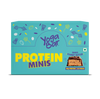
Example: Yoga Bar's OG Smoothie is made with real oats, banana, almonds, dates and 4 super seeds. A 160 ml bottle has 6 g of protein and 5.6 g of fibre, is labelled with no added sugar, and is thick enough to feel like a light meal.

Occasion 2: A mid-day snack
The 4 p.m. slump is a snacking problem. Biscuits and chips deliver quick energy followed by a drop. A smoothie with fibre and some protein is a smarter alternative, because it keeps hunger in check until dinner.
-
Keep a bottle in your bag or office fridge so that you do not reach for the vending machine.
-
Sip it slowly. Thick, fibre-rich drinks fill you up more when you do not rush them.
-
Pair it with a few nuts if you have a long gap before dinner.
Occasion 3: Recovery
Recovery is where you need to be most careful. After a heavy strength session, your muscles benefit from roughly 20 g to 40 g of protein. A typical bottled smoothie does not reach that level on its own. OG Smoothie, for example, contains 6 g of protein per bottle, which is useful but modest.
So how can a smoothie fit into recovery?
-
After light exercise. A walk, yoga or an easy cycle does not demand a big protein dose, and a smoothie works well for carbohydrates, fibre and hydration.
-
Alongside a protein source. Have your smoothie with a protein shake, paneer, eggs or Greek yoghurt.
-
As the carbohydrate half of recovery. Pair it with a dedicated protein shake. For a ready-to-drink option, see our Cold Coffee Protein Shake guide.
If recovery is your main goal, take a look at Yoga Bar's 26g Protein Shakes for the protein, and keep the smoothie for the fibre and carbohydrates.
Benefits of a protein-and-fibre smoothie
-
Convenience. It is ready to drink when you are rushed.
-
Fullness. Fibre and protein slow digestion and help you stay satisfied.
-
Better snacking. It replaces sugary or fried snacks with whole-food ingredients.
-
Nutrient variety. Seeds, nuts and fruit add micronutrients you may miss on busy days.
What to check before you buy a bottled smoothie
|
Check |
Look for |
Avoid |
|---|---|---|
|
Ingredient order |
Oats, fruit, nuts and seeds first |
Fruit juice concentrate or sugar first |
|
Sweetener |
Sweetness from fruit or dates, "no added sugar" |
Sugar syrup, glucose, artificial sweeteners |
|
Fibre |
A clear fibre value per bottle |
No fibre mentioned |
|
Protein |
A stated protein value that matches your goal |
Protein claims with no numbers |
|
Additives |
No added preservatives or artificial flavours |
Long lists of E-numbers |
The same discipline applies to supplements. Our guide on how to read a protein powder label shows how to apply it.
Who should be careful with smoothies?
Even a healthy smoothie contains natural sugar from fruit and dates. If you have diabetes or are managing blood sugar, speak to your doctor or dietitian about how a smoothie fits into your plan. Anyone with nut or seed allergies should check the ingredient list before drinking. Small children should not be given whole nuts or seeds in a way that creates a choking risk.
A simple daily pattern
-
Rushed mornings: smoothie plus an egg or a handful of nuts.
-
Afternoon gap: smoothie as a filling snack.
-
Heavy training days: protein shake after the session, smoothie later for carbohydrates and fibre.
Frequently Asked Questions
Q1: Is a smoothie a good breakfast?
It can be, if it is thick, made with whole ingredients and includes fibre and some protein. A thin, juice-based smoothie is less filling and may leave you hungry soon after.
Q2: Can I drink a smoothie every day?
Most healthy adults can enjoy a smoothie daily as part of a varied diet. Watch the total sugar and calories, and rotate other breakfasts and snacks through the week.
Q3: How much protein should a smoothie have?
It depends on the role. A breakfast or snack smoothie with 5 g to 10 g of protein is useful when combined with other foods. For recovery after heavy training, aim for 20 g to 40 g in total from the smoothie and other sources.
Q4: Is it better to eat fruit or drink it in a smoothie?
Whole fruit is more filling per calorie, but a smoothie that includes oats, nuts and seeds can offer fibre and healthy fats too. Choose the format you will actually stick with.
Q5: Does OG Smoothie contain added sugar?
OG Smoothie is labelled with no added sugar. Its sweetness comes from banana and dates, which contain natural sugars.
Q6: Can I give a smoothie to children?
A smoothie can suit older children, but because OG Smoothie contains nuts and small seeds, check suitability for young children and any allergies first.